


What you need to know
- Overclockers recently managed to get the Intel Core i9-13900K to hit a clock speed of 9GHz.
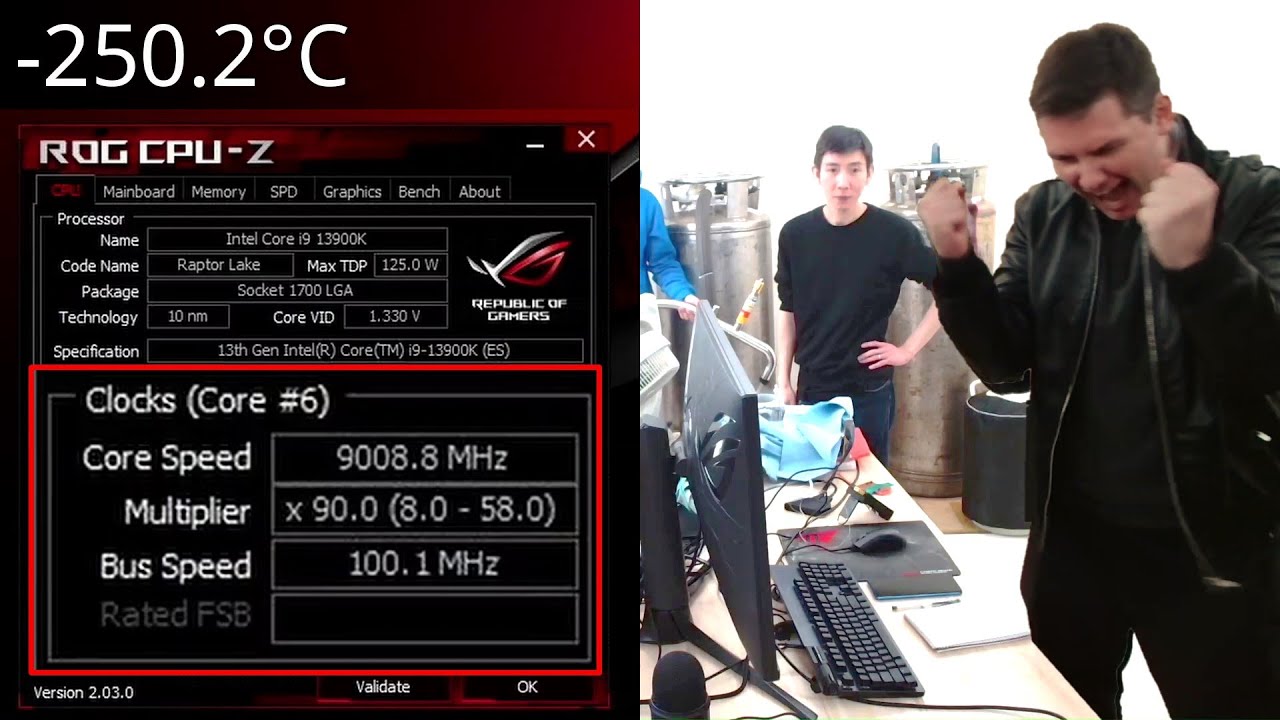
- The feat was accomplished using liquid helium, which allowed the CPU to be dropped to -250 degree Celsius.
- The Core i9-13900K usually has a base speed of 3.0GHz and peaks at a 5.8GHz turbo speed.
The Intel Core i9-13900K is a beast of a CPU. When shipped, it already has a high clock speed that can go even higher with overclocking. When our editor-in-chief Daniel Rubino visited Intel in Israel, the chipmaker showed the Core i9-13900K hitting 8.0GHz. Since then, overclocking experts Jon Sandström and Pieter Plaiser got the chip to reach a speed of 9GHz, which is a new world record (via PC Mag).
For context, the Core i9-13900K has 24 cores (16 E-cores and 8 P-cores with 32 threads). It has a base speed of 3.0GHz and a peak turbo of 5.8GHz, at least in normal circumstances.
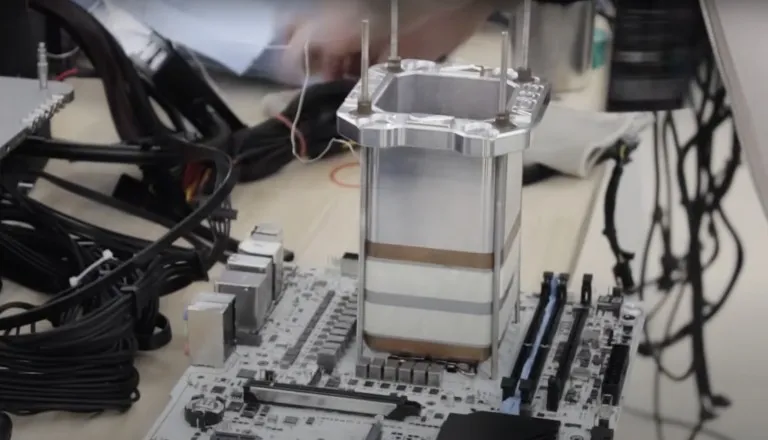
Neither Intel nor Sandström and Plaiser reached their respective clock speeds with methods that could be repeated in a normal PC setup, but they're both impressive. While Intel used liquid nitrogen, which is commonly used for cooling CPUs, Sandström and Plaiser used liquid helium. The PC enthusiasts were able to cool the chip down to -250 degrees Celsius (-418 Fahrenheit).
With temperatures that low, it's almost worth measuring things in Kelvin. The Intel Core i9-13900K within the liquid helium chamber reached a chilly 23 degrees Kelvin.
YouTube channel SkatterBencher shared a behind-the-scenes look at the CPU hitting 9GHz.
Thanks to a metal pot placed over the Intel chip, Sandström and Plaiser were able to drop the CPUs temperature lower than what is usually achievable. Liquid helium is colder than liquid nitrogen, but the amount of the substance the pair of PC experts had could only keep temperatures down for an hour.

This is one of the fastest CPUs on the market. The retail version has a base clock speed of 3GHz and a turbo boost of 5.8GHz. You won't see the 9GHz speed shown off by Jon Sandström and Pieter Plaiser in normal settings, but the Core i9-13900K is still extremely powerful.